The 30-second version
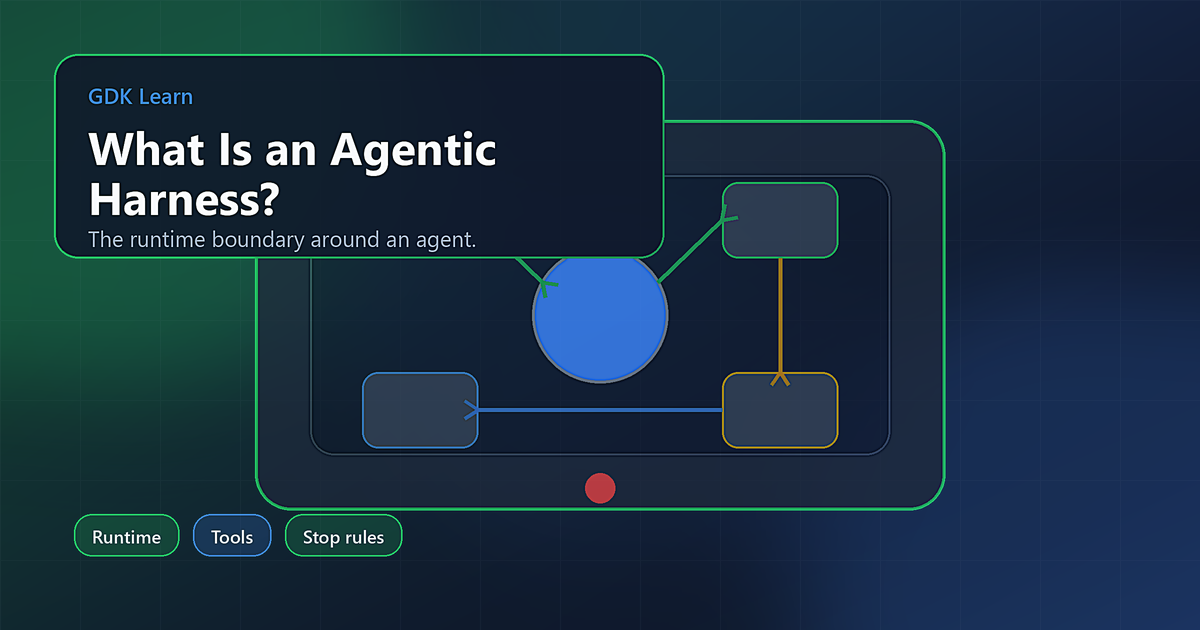
An AI model, on its own, reads and writes text. It can reason and pick a next step, but it cannot reach outside its own head, cannot remember across the gaps, and will keep going forever if nothing stops it. The harness is the program that fixes all of that. It gives the model hands, a memory, a clock, a budget, and a rule about when to ask permission.
Here is the part that surprises people: most of what makes an agent reliable or unreliable, safe or dangerous, cheap or ruinously expensive, lives in the harness, not in the model. The model in a slick demo and the model in a production agent are often the same model. The harness is what makes one of them trustworthy.
A mental model you can keep
The usual way to explain a harness is to call the model the engine and the harness the chassis. That picture is wrong in the way that matters most. A chassis is passive. It sits there and holds the engine. A harness is active. It drives.
A better picture: the model is a brilliant but reckless explorer, and the harness is the expedition outfitter and guide. The guide is not smarter than the explorer. The guide's whole job is to turn raw talent into a trip that ends well.
The guide packs the right gear, which are the explorer's tools. The guide sets the route and a turn-around time, which is the loop and the rule for when to stop. The guide carries the map and writes in the journal so the party does not circle the same valley twice, which is the memory and the record. The guide rations the food and water, which is the budget. And the guide radios base camp before anything dangerous, which is the part where a human approves the risky move. The explorer alone is a great story that ends badly. The explorer with a good guide gets up the mountain and back down.
The anatomy: what a harness is made of
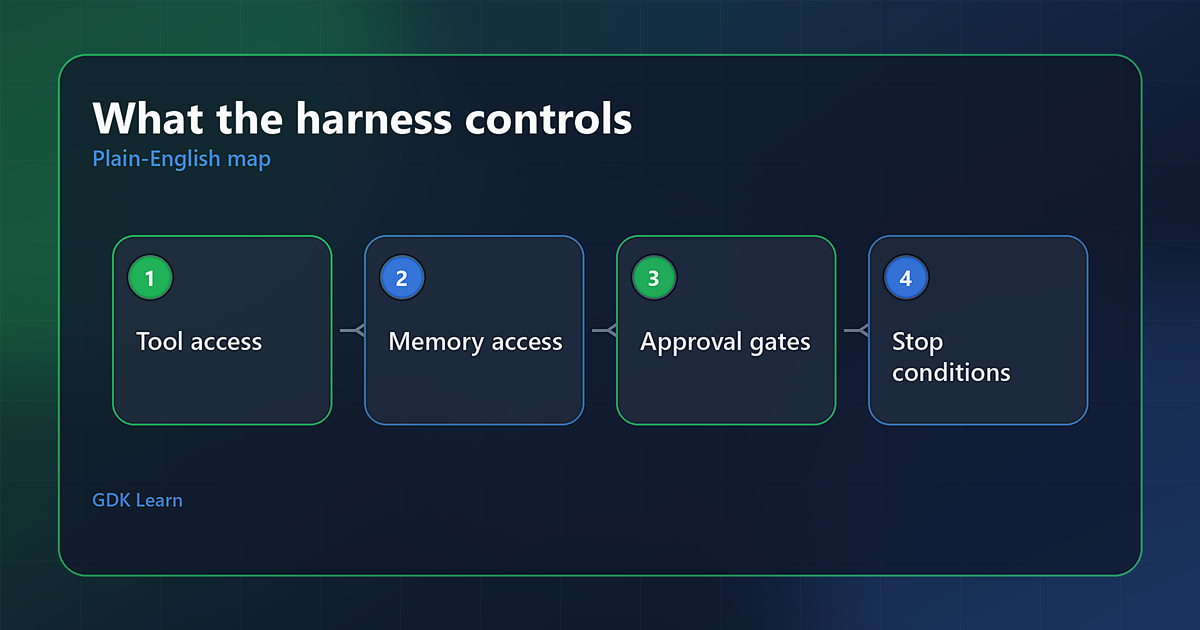
Strip away the jargon and a harness is a small number of parts. Each one is something the guide does for the explorer.
The loop. The harness asks the model for the next step, carries it out, feeds the result back, and decides whether to go again. Think, act, look, repeat. Without this loop there is no agent, just a single answer.
Tool use. When the model asks to use a tool, the harness runs the real tool and hands back the result. This is how the model searches the web, reads a file, or sends an email. The harness is careful to treat what a tool returns as information, not as a new set of orders.
Memory and the record. The harness holds what the model is working on right now, saves what should be kept, and writes down what happened. That record is how you find out later why the agent did something odd.
Budget and stop control. The harness enforces the limits the model cannot enforce on itself: a cap on how much it can spend, a limit on how many steps it can take, and a clock. These are the difference between a stuck agent that quietly stops and a stuck agent that runs up a large bill.
The approval gate. The harness decides which actions the model may take on its own and which need a human to sign off first. Sending money, deleting data, posting in public. A good harness stops at the edge and asks.
Where a real harness earns its keep, and where it is overkill
You need a real harness when the path changes from case to case and something has to read the situation and decide the next move. Research that branches, a workflow where step three depends on what step two found, a task you want to run unattended. That is harness territory.
When the steps are always the same, you do not need an agentic harness at all. You need a plain automation that runs the same way every time and costs almost nothing. Wrapping a fixed, repeatable task in an agent harness is like hiring a mountain guide to walk you to your own mailbox.
And here is the honest part. The math behind harnesses is unforgiving. If each step an agent takes is right ninety-five percent of the time, a hundred-step task only finishes correctly about half a percent of the time, unless something checks the work along the way. That is why a serious harness verifies as it goes, caps the budget, limits the steps, and asks a human before anything that matters. Those are not optional polish. They are the whole job.
The short reality check
It is tempting to think a better model will fix a shaky agent. A better model helps, because it gets more steps right. But a better model does not add a budget cap, a stop condition, or an approval gate. Those are harness work. Reliability is something you build around the model, not something you buy inside it. When an agent does something expensive or wrong, the fix is almost always in the harness.
Short explainer video coming soon.
How this connects to what we build
When we build a custom agent, most of the real work is the harness: the loop, the tools, the limits, and the points where a human stays in control. That is where a tool you can trust with actual work gets separated from a demo you have to babysit. The standard is the same one we hold everything to. It has to save time, protect revenue, cut mistakes, or kill a task you hate, and do it safely. If a harness cannot be made safe enough for the job, the honest answer is not to ship the agent, and we will tell you so.